
Gum Disease Treatment in the Upper East Side, NYC
Bleeding gums aren’t normal — but they are treatable, especially when we catch it early.
You Might Be Doing Everything Right — and Still Have Gum Disease
• Periodontal evaluation at every visit — not just when symptoms appear
• Deep cleaning (scaling and root planing) in-house
• Ongoing gum therapy and maintenance
You brush twice a day. You floss. Your gums still bleed when you come in for a cleaning. What’s going on?
It doesn’t necessarily mean you’re doing something wrong. Bad bacteria can hide deep beneath your gum line, in places your toothbrush and floss can’t reach — where there’s no oxygen, where they thrive. Some people are genetically predisposed to gum disease. Some medications affect gum health. Some conditions make you more vulnerable no matter how careful you are at home.
That’s why professional care matters. Because we can reach where you can’t. We can treat what you can’t eliminate on your own. And if we catch it early, gum disease is treatable. If we don’t catch it until the bone has been affected, your options become much more limited.
What Is Gum Disease?
Gum disease starts as gingivitis — inflammation of the gums caused by bacterial buildup along and below the gum line. At this stage, it’s reversible. Your gums may bleed when you brush or floss, they may look red or swollen, but the bone underneath is still intact.
When gingivitis goes untreated, it can progress to periodontitis — a more serious condition where the infection reaches the bone that supports your teeth. Pockets form between your teeth and gums. Bone starts to break down. Teeth can loosen. This is where the real damage happens, and it’s often painless until it’s advanced.
The difference between catching it at stage one and catching it at stage three is enormous — and it’s why we evaluate your gum health at every single visit.
Dental Deep Cleaning (Scaling and Root Planing)
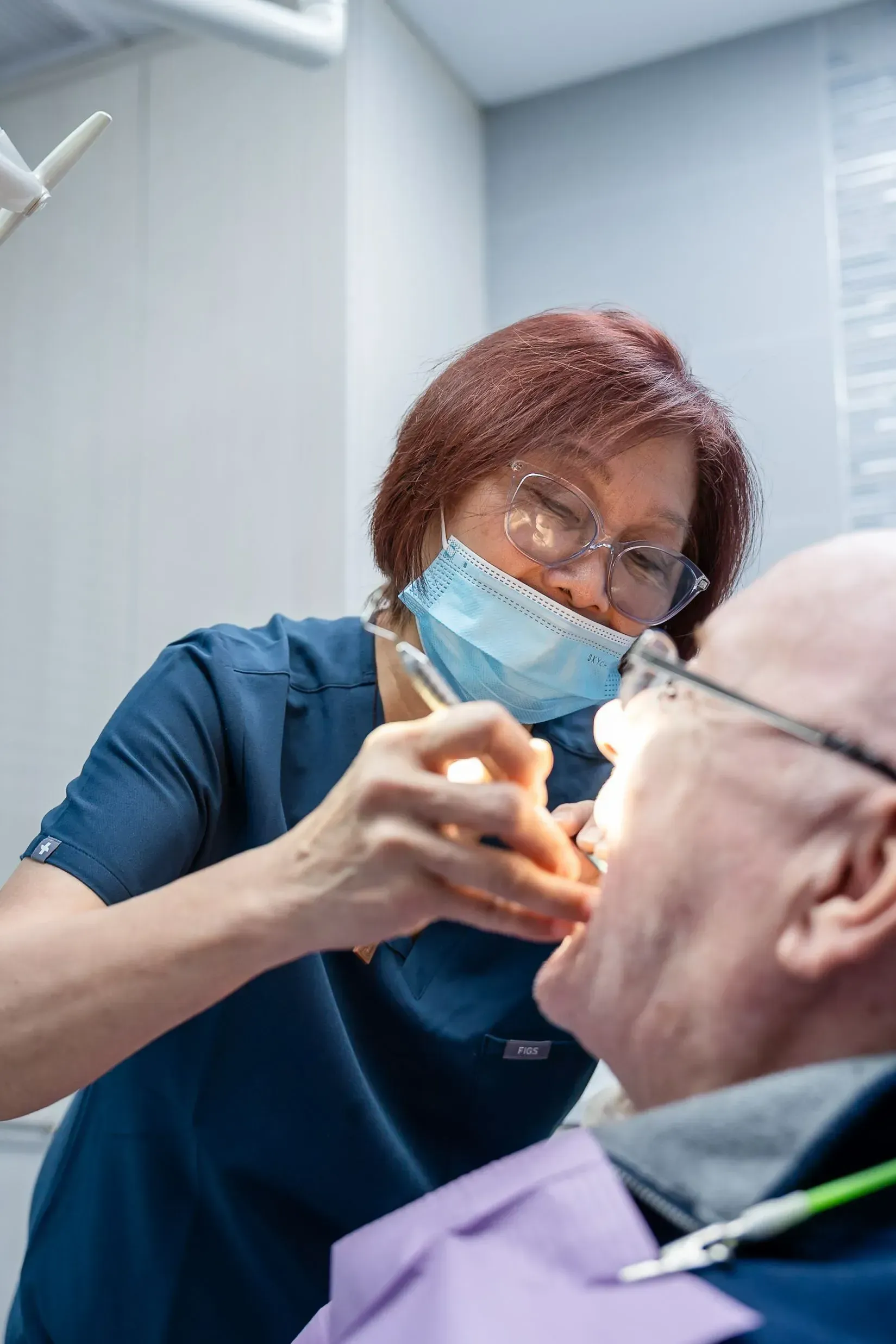
When gum disease has progressed beyond what a regular cleaning can address, a deep cleaning is often the most effective first step. Scaling removes the bacterial buildup — tartar and plaque — from below the gum line, in areas a standard cleaning doesn’t reach. Root planing smooths the root surfaces so your gums can reattach and heal.
It’s not the same as a routine cleaning. It’s a therapeutic procedure designed to treat active infection and stop the disease from progressing. We numb the area so you’re comfortable throughout, and we typically do it in sections over two visits.
Gum Therapy and Ongoing Maintenance
After a deep cleaning, your gums need continued monitoring. Gum disease is manageable, but it’s not something that disappears permanently. We schedule maintenance visits — typically every three to four months — to keep the bacteria under control and prevent the disease from returning.
These visits are more than a cleaning. We measure your pockets, check for changes, and adjust your care plan based on how your gums are responding. It’s active management, not autopilot — and it’s what keeps early-stage disease from becoming late-stage disease.
When Gum Disease Has Gone Further
If gum disease has progressed to the point where deep cleaning alone isn’t enough, additional treatment may be needed — gum surgery or bone grafting depending on the severity. Dr. Daniel’s periodontal training means these procedures are handled in-house, by the same doctor who diagnosed the problem and has been managing your care from the start.
#1 Rated Dentist
- Placed and restored in-house by Dr. Daniel
- Periodontal training for precise bone and tissue work
- Foundation prepared before placement — always
- Single teeth, bridges, and full-arch solutions
Frequently Asked Questions
Is gum disease reversible?
Gingivitis — the early stage — is fully reversible with professional treatment and good home care. Once it progresses to periodontitis and bone loss has occurred, we can manage it and prevent further damage, but we can’t regrow what’s been lost without grafting. That’s why early detection matters so much.Do I really need a deep cleaning?
If you have periodontal pockets, active infection, or buildup below the gum line that a regular cleaning can’t reach — yes. If you don’t, then no. We’ll show you exactly what we’re seeing and explain why we’re recommending it. We don’t prescribe treatment you don’t need.My gums bleed but nothing hurts — should I be concerned?
Yes. Bleeding gums are one of the earliest signs of gum disease, and it’s often painless in the early stages. That’s what makes it tricky — by the time it hurts, the disease is usually more advanced. If your gums bleed when you brush or floss, it’s worth getting evaluated.How often do I need to come in after treatment?
Typically every three to four months for periodontal maintenance. This is more frequent than a standard twice-a-year cleaning, but it’s what keeps the disease from coming back. Over time, depending on how your gums respond, we may be able to adjust that schedule.
Thoughtful Dentistry, Explained
We believe informed patients make confident decisions. Our journal offers thoughtful guidance on prevention, treatment, and the principles behind long-term oral health.