
Invisalign in the Upper East Side, NYC
Straighter teeth without brackets, without wires, and without losing months of your life to a process you can’t control.
Invisalign Runs in This Family
• Clear, removable aligners — virtually invisible
• Dr. Bradley is an Invisalign patient himself
• Three generations of orthodontic expertise
• Bite and gum health evaluated throughout
• If you’re not happy with the result, we make it right
Dr. Gerald Wank — Dr. Daniel’s father and Dr. Bradley’s grandfather — was a specialist in both orthodontics and periodontics. He was a full professor at NYU Dental School, past president of the Dental Society, and lectured internationally. At 101, he still enjoys discussing cases with the family.
That knowledge has been passed down through three generations. When we evaluate your alignment, we’re not just looking at where your teeth are today — we’re drawing on decades of understanding about how teeth, gums, and bone work together over time.
Why Where You Get Invisalign Matters
You can get Invisalign at a lot of places. Chains, corporate offices, even mail-order kits. But the technology is only as good as the dentist managing it. The aligners move your teeth — but who’s making sure those teeth are moving into the right position, that your bite is tracking correctly, and that your gums are staying healthy throughout the process?
That’s the difference between Invisalign that gives you the result you wanted and Invisalign that leaves you wondering what went wrong.
At our practice, Dr. Bradley monitors your progress at every visit — checking not just alignment, but your bite, your gum health, and how the overall plan is tracking. If something needs adjusting, we adjust it. If a refinement is needed, we do it. And if you’re not happy with where things are heading, you talk to us directly — not a billing department, not a call center.
How Invisalign Works
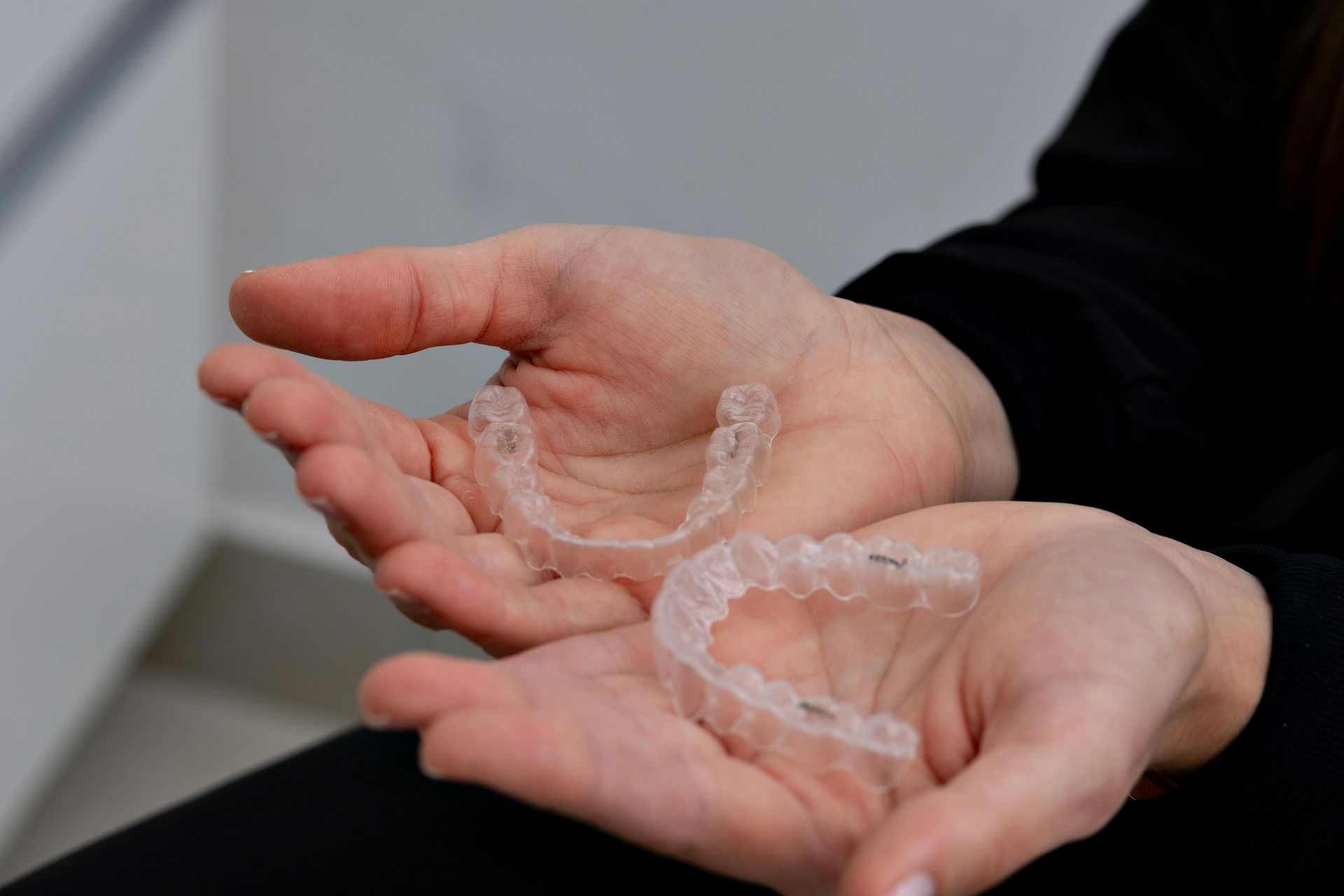
Invisalign uses a series of custom-made clear aligners to gradually shift your teeth into the desired position. Each set of aligners is worn for about one to two weeks before moving to the next. The trays are removable — you take them out to eat, brush, and floss — and they’re virtually invisible when worn.
Treatment starts with digital imaging and a detailed plan that maps out every stage of movement. You’ll see where your teeth are headed before you start, and we check in regularly to make sure reality matches the plan.
Dr. Bradley is actually going through Invisalign himself right now — so when he talks about the adjustment period, the routine of removing trays to eat, and the feeling of switching to a new set, he’s speaking from personal experience. That’s a level of understanding most dentists can’t offer.
More Than Just Straight Teeth
Crowding, gaps, and misalignment aren’t just cosmetic issues. They can contribute to uneven wear, jaw tension, and hard-to-clean areas that become breeding grounds for decay and gum disease. Correcting alignment often makes your teeth easier to care for, more comfortable to live with, and more resilient long-term.
Dr. Daniel’s periodontal background means we’re looking at alignment through a health lens — not just an aesthetic one. If your gums need attention before or during treatment, we handle it in-house rather than discovering it after the trays come off. That combination of orthodontic and periodontal thinking has been part of this family’s approach for three generations — and it shows in the results.
What Makes Our Approach Different
We’ve heard the stories. A patient finishes Invisalign at a chain, isn’t happy with the result, and is told there’s nothing they can do. The dentist can’t help because they’re not in charge. The billing department is in another state.
That doesn’t happen here. If you’re unhappy, you talk to us — the actual dentists who planned and monitored your treatment. If something needs to be revised, we revise it. Your happiness is our happiness. That’s not a tagline — it’s how we operate.
#1 Rated Dentist
- Placed and restored in-house by Dr. Daniel
- Periodontal training for precise bone and tissue work
- Foundation prepared before placement — always
- Single teeth, bridges, and full-arch solutions
Frequently Asked Questions
Do I need an orthodontist, or can a general dentist do Invisalign?
Invisalign can be provided by trained general dentists — and in many cases, having a general dentist manage your treatment is an advantage. We see your whole mouth at every visit, not just the alignment. That means we catch gum issues, bite problems, or other concerns in real time rather than discovering them after treatment is complete.Am I too old for Invisalign?
No. We treat adults of all ages with Invisalign. As long as your gums and bone are healthy, there’s no age limit. Correcting alignment later in life can improve your bite, reduce wear, and make long-term dental care easier.What if I’ve had orthodontic work before and my teeth shifted back?
It happens — and you’re not alone. Dr. Bradley had braces growing up, didn’t wear his retainer, and is now going through Invisalign himself. If your teeth have shifted since previous treatment, we can evaluate what’s going on and build a plan to get them back where they belong.How long does Invisalign take?
It depends on the complexity of your case. Minor crowding might take a few months. More involved cases can take a year or longer. We’ll give you a realistic timeline during your consultation — and we check your progress regularly to make sure treatment stays on track.Does Invisalign hurt?
You’ll feel pressure when you switch to a new set of trays — that’s the teeth moving. It’s usually mild and fades within a day or two. Most patients find it much more comfortable than traditional braces.Can I eat normally with Invisalign?
Yes. You remove the trays before eating, so there are no food restrictions. You brush before putting them back in. The only adjustment is building that habit into your routine — which becomes second nature pretty quickly.What if I’m not happy with the results?
Talk to us. We’re your dentists, not a middleman. If refinement is needed, we plan and execute it. If something isn’t tracking the way it should, we catch it during your regular visits and course-correct. You won’t be left with a result you didn’t agree to.
Thoughtful Dentistry, Explained
We believe informed patients make confident decisions. Our journal offers thoughtful guidance on prevention, treatment, and the principles behind long-term oral health.