Deep Cleaning or Regular Cleaning? How to Know Which You Need
If you've been told you need a deep cleaning, it's natural to wonder whether a regular cleaning would do. The answer depends on what's happening below your gumline. A regular cleaning cares for healthy teeth and gums. A deep cleaning, called scaling and root planing, treats gum disease that has started below the gums.
At Daniel Wank DDS, we recommend a deep cleaning only when your exam shows you need one. Here's how to tell the two apart, what each one does, and how we decide which is right for you.
What's the difference between a regular cleaning and a deep cleaning?
A regular cleaning works above the gums, and a deep cleaning works below them. As we put it in one of our videos, "Regular is above the gums and deep is below."
During a regular cleaning, our team removes plaque and hardened tartar from your teeth. It's the cleaning you get at a routine checkup when your gums are healthy.
A deep cleaning reaches down to the roots of your teeth. Scaling removes tartar and bacteria from your tooth surfaces and from beneath your gums. Root planing smooths the root surfaces, which discourages tartar and bacteria from building up again and gives your gums a clean surface to heal against. The Mayo Clinic explains scaling and root planing in more detail.
Dr. Daniel Wank has noticed that many patients aren't sure where a regular cleaning ends and gum treatment begins. That's a fair question, and it's one we're always happy to walk you through.
How do you know if you need a deep cleaning?
You need a deep cleaning when your exam shows gum disease below the gumline. Your dentist finds that with x-rays and a careful look at your gums, so the exam comes first.
Signs worth mentioning at your next visit include:
- Gums that bleed when you brush or floss
- Red, swollen or tender gums
- Bad breath that keeps coming back
- Gums that are pulling away from your teeth
- Teeth that feel loose
The Mayo Clinic's guide to gum disease lists these and other signs.
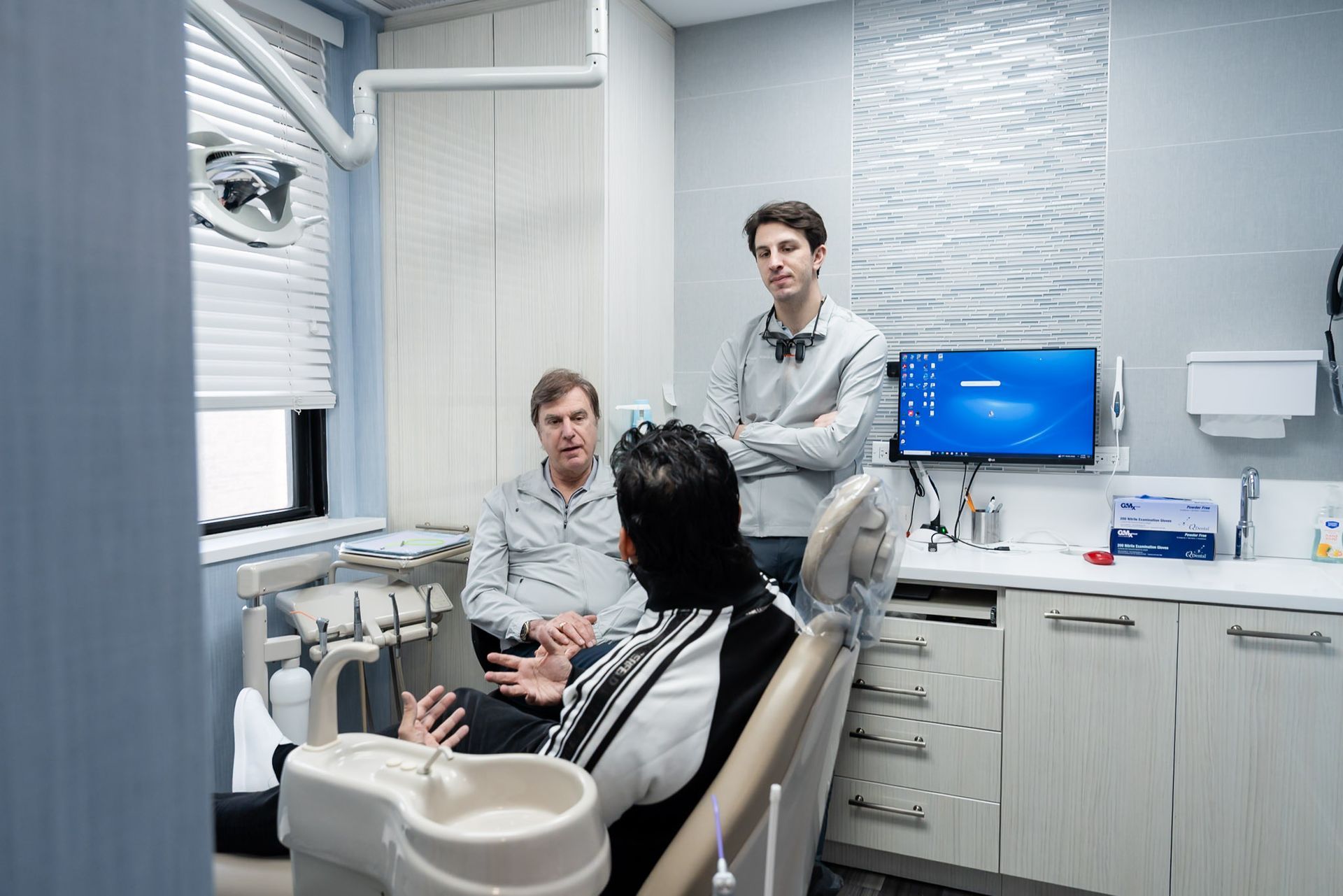
At your exam, Dr. Daniel takes x-rays and intraoral pictures, which are photos taken inside your mouth. On the x-rays, he looks at your periodontal condition, meaning the health of your gums and the bone that holds your teeth in place. Then he shows you the pictures, so you can see what he sees before you decide on anything.
What happens during a deep cleaning?
A deep cleaning removes the tartar and bacteria that have collected below your gums, then smooths the root surfaces so your gums can heal. Scaling and root planing is one of the first, nonsurgical treatments for gum disease.
Once your gums are healthy again, regular checkups help keep them that way. Your home care counts too. Brushing twice a day and cleaning between your teeth every day help control the plaque that leads to gum disease, according to the National Institute of Dental and Craniofacial Research.
Why do Upper East Side patients choose Daniel Wank DDS for gum care?
Dr. Daniel Wank completed a postgraduate certificate in periodontics after graduating from NYU, and he also practices general dentistry. The dentist checking your gums at a routine visit is trained to treat them, too. Periodontal treatment, implant dentistry and cosmetic care are all handled in-house, so your care stays in one place with doctors who know your full picture.
Dr. Daniel has been practicing dentistry in New York City for over 35 years, and he takes his time with every patient. In his words, "I give a lot of time for my consultations." That time goes into walking you through your x-rays and photos, so the choice between a regular cleaning and a deep cleaning makes sense to you before we start.
Dr. Daniel and his son, Dr. Bradley Wank, practice side by side on East 61st Street, so you get two doctors who share one approach to your long-term oral health.
How often should you get a dental cleaning?
Dr. Daniel likes to see patients twice a year for a regular checkup. "I typically like to see a patient twice a year," he says.
Each visit is a chance to check your gums, so the right kind of cleaning is matched to what your mouth needs at that time. You can read more about what a visit includes on our dental cleanings and checkups page.
What should you do if your gums bleed when you brush?
Book an exam soon. Gums that bleed when you brush or floss are one of the common signs of gum disease, and an exam shows whether a regular cleaning or a deep cleaning is the right next step.
Until your visit, keep brushing gently twice a day and keep cleaning between your teeth. Make a note of where the bleeding happens and how long it's been going on, and bring it up when you come in. Those details help us understand what your gums need.
Not sure which cleaning you need? Call our Upper East Side dental office at (212) 867-0345 or contact us to schedule a visit. We're at 115 East 61st Street, on the 6th floor, between Lexington and Park Avenue.
Published by Daniel Wank DDS.
Recent Posts